Why Pakistani Businesses Lose Contract Disputes They Could Have Won with One Legal Review
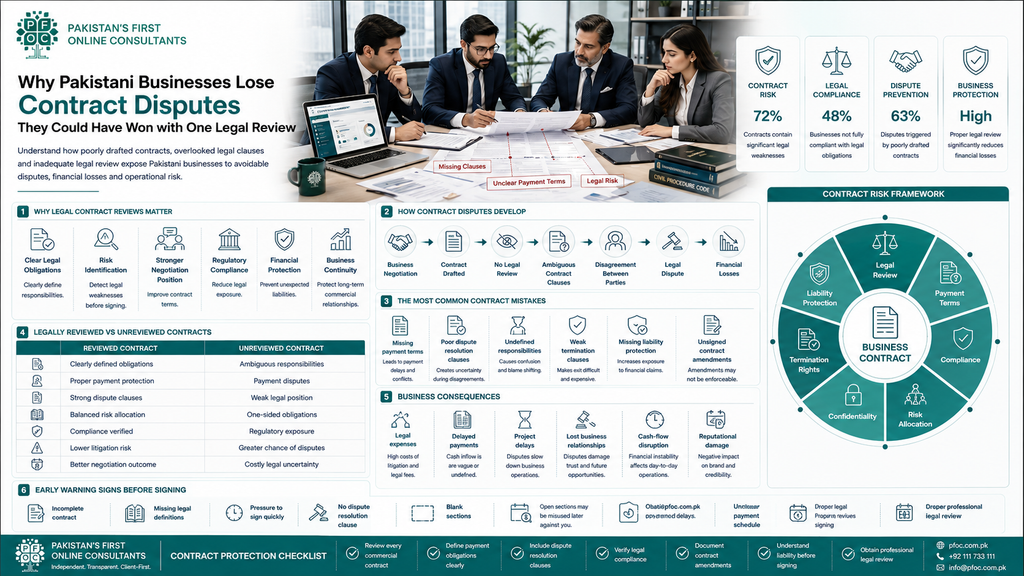
A business owner in Lahore once told me he was “100% sure” he’d win his case against a supplier who missed three deadlines in a row. He lost. Not because he was wrong about the facts, but because his contract never defined what “on time” actually meant. That’s the trap so many companies fall into, and it’s exactly why legal consultancy matters long before a dispute ever reaches a courtroom or an arbitrator’s desk. Winning or losing usually comes down to what was written on paper, not what everyone assumed at the time of signing.
Why Businesses Lose Cases They Thought They’d Win?
Most owners believe a signed contract is automatic protection. It isn’t. Trust between two companies doesn’t hold up in front of a judge, and neither does a template downloaded from the internet at 11 p.m. before a deadline. Not every clause in a contract is enforceable, either some are vague enough to mean nothing at all.
Here’s the uncomfortable truth: businesses rarely lose disputes because they were in the wrong. They lose because their contract failed to protect a position that was actually fair.
What Happens Long Before a Dispute Begins?
A contract dispute doesn’t start with a lawsuit. It starts during negotiation, gets worse during drafting, and quietly turns into a landmine the moment nobody reviews it properly. Then comes performance, a misunderstanding, a missed obligation, a breach and suddenly you’re staring at a legal notice.
Prevention has to happen at the drafting stage, not after the relationship has already broken down.
What One Legal Review Can Actually Catch?
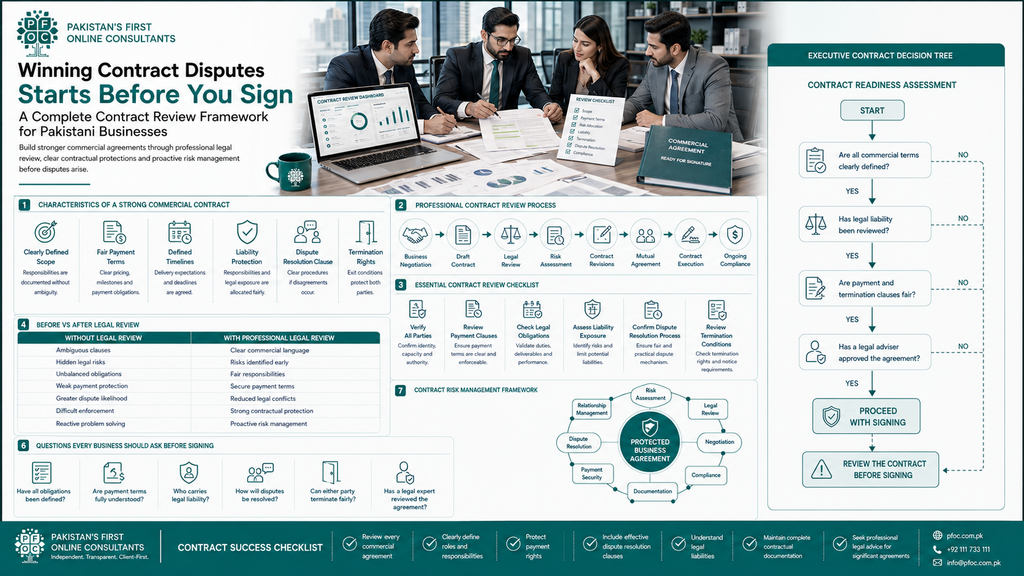
A single professional review can flag missing protections, one-sided obligations, ambiguous wording, and compliance gaps before they become expensive problems. Think of it as a pressure test someone experienced reading the contract the way an opposing lawyer eventually will.
The Hidden Costs Nobody Budgets For
Skipping a review doesn’t just risk legal fees. It risks the business itself.
Unpaid invoices. Weak payment clauses with no milestones and no late-payment penalties make collection painfully difficult.
Scope creep. Without clearly defined deliverables, clients keep asking for “just one more thing” unpaid, indefinitely.
Expensive disputes. Litigation, arbitration, expert witnesses, and the hours your team spends firefighting instead of working.it adds up fast.
Cash flow strain. Delayed payments mean delayed payroll, delayed growth, and sometimes emergency financing you didn’t plan for.
Damaged relationships. Disputes rarely stay professional. Clients walk away, suppliers get defensive, and your reputation takes the hit.
Lost investment opportunities. Investors run due diligence. A messy contract history raises red flags fast.
Operational drag. Every hour spent on a legal fight is an hour not spent growing the business.
The Clauses That Actually Decide Who Wins
A handful of clauses do most of the heavy lifting in any dispute:
- Payment terms milestones, deadlines, and remedies for late payment
- Scope of work deliverables, responsibilities, and how changes get approved
- Termination clause exit rights, notice periods, and what happens after
- Limitation of liability how much financial exposure each side actually carries
- Indemnity clause who pays when something goes wrong, and why this is so often drafted badly
- IP ownership critical for software, design, and creative work
- Confidentiality protecting trade secrets and customer data
- Force majeure what counts as a genuine unforeseeable event
- Governing law and jurisdiction especially vital for cross-border deals
- Dispute resolution deciding upfront between negotiation, mediation, arbitration, or litigation
Miss even one of these, and the strongest case in the world can still fall apart.
The Mistakes That Cost Pakistani Businesses the Most
Using a generic internet template. Copying an old agreement without checking if it still fits. Signing without actually reading it. Accepting one-sided terms just to close the deal faster. Relying on a verbal promise because “we’ve worked together before.” Every one of these feels harmless at the moment until it isn’t.
How One Missing Clause Triggers a Domino Effect?
A weak payment clause leads to a late payment. That leads to a cash flow shortage, which delays the project, which frustrates the client, which ends in a legal notice — and eventually, arbitration or court. One gap at the start can unravel an entire business relationship months later.
A Quick Risk Framework
Low-risk contracts have clear obligations, defined payment terms, and balanced liability. Moderate-risk agreements leave one or two terms vague. High-risk contracts have undefined deliverables, no exit clause, or one-sided liability sign these without review at your own peril.
Industry Snapshots
Software houses need airtight IP and licensing terms. Exporters need currency and delivery clarity. Construction firms need protection against variations and delays. Agencies need defined approval processes to stop scope creep. Manufacturers need warranty terms that don’t leave them exposed. Startups need founder and investor agreements that hold up under scrutiny.
Before You Sign: A Quick Checklist
Deliverables defined. Payment schedule agreed. Deadlines are realistic. Liability capped. Termination process included. IP ownership is clear. Governing law identified. Signatory authority verified. If any of these are missing, don’t sign yet this is exactly the kind of checklist a good legal consultancy runs through before giving a contract the green light.
Common Myths Worth Retiring
Legal review isn’t just for large corporations, and templates aren’t automatically safe just because they’re common. Not every clause you sign is enforceable, and verbal promises won’t hold up when money’s on the line. A proper review doesn’t slow business down.it prevents the far bigger delay of a dispute later.
Frequently Asked Questions
Why do businesses lose contract disputes even when they’re in the right?
Because courts and arbitrators rule on what the contract actually says, not on what either side intended. A verbal understanding or a “we both know what we meant” attitude carries no weight once a dispute lands in front of a judge.
Is contract review really necessary for small businesses, or just large companies?
Small businesses often have less room to absorb a loss. A single bad clause in a mid-sized contract can hurt a growing SME far more than it would a large corporation with deeper reserves.
Can one missing clause really decide the outcome of a case?
Yes. A single gap, say, no defined deadline or no liability cap can shift an entire dispute in the other party’s favor, regardless of how strong the rest of the agreement looks.
What types of contracts should always be reviewed before signing?
Anything involving payment obligations, intellectual property, exclusivity, or long-term commitments. Vendor agreements, client contracts, NDAs, and founder or investor agreements all fall into this category.
How can a business spot an unfair clause without a legal background?
Look for anything vague, anything that only protects one side, or anything with no clear consequence if the other party fails to deliver. If a clause raises more questions than it answers, it needs a second look.
The Bottom Line
Most contract disputes are avoidable. The strongest position a business can have isn’t built during litigation.it’s built the day the contract is drafted.
This is where PFOC (Pakistan’s First Online Consultants) comes in. Our team reviews commercial agreements before they’re signed, catching the exact risks covered in this article: weak payment terms, one-sided liability, missing exit rights, and vague scope language. Whether you’re a startup, exporter, or software house, we bring the same discipline to every contract: fix what needs fixing while there’s still time.
Don’t sign on trust alone. Get it reviewed by PFOC first.it’s the cheapest insurance your business will ever buy.