
When Communication Can’t Fail: How RETEVIS Industrial Two-Way Radios Keep Construction and Warehousing on Track
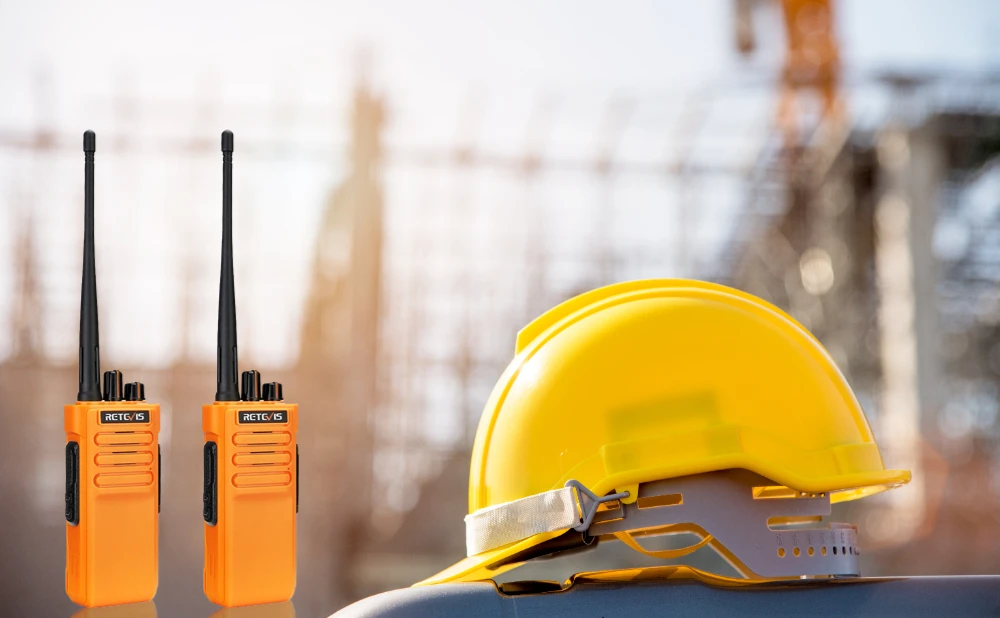
From distorted crane commands to silent aisles inside massive distribution centers, communication breakdowns continue to undermine safety and efficiency. A new reliability-focused standard is raising the bar.
On active construction sites and inside high-throughput warehouses, communication is not a background function—it is the operational backbone. Every message exchanged between supervisors, operators, drivers, and crews directly affects safety outcomes and production flow. When a radio message cuts out or arrives unclear, the impact is immediate: paused lifts, misrouted inventory, delayed shipments, and elevated risk on the floor.
Despite this reality, two-way radios are often purchased as off-the-shelf tools rather than evaluated as mission-critical infrastructure. RETEVIS is working to change that perspective by introducing a disciplined, performance-driven approach to industrial communication through its Industrial Two Way Radio Communications Reliability Standard Guide.
Supported by a complimentary, site-specific Reliability Diagnostic, this initiative gives construction managers and warehouse leaders a practical framework to select and deploy RETEVIS Industrial Two Way Radios based on real-world conditions—not assumptions.
“Communication failures are rarely dramatic, but they are expensive,” says a RETEVIS solutions advisor. “A brief misunderstanding between a crane operator and a spotter, or repeated signal loss in a warehouse aisle, compounds into lost time, increased risk, and reduced throughput. Our reliability standard focuses on preventing those failures before they occur.”
Identifying the Weak Points in Industrial Communication
The RETEVIS reliability standard addresses the specific stressors that consistently cause radio performance to degrade in construction and logistics environments, translating operational pain points into measurable technical requirements.
Construction Environments: Precision Under Pressure
Voice Clarity in High-Noise Conditions
Heavy equipment, engines, and power tools routinely push ambient noise past safe listening thresholds. The standard emphasizes advanced digital noise filtering and high-output audio systems that prioritize voice intelligibility, ensuring critical instructions reach crane operators, riggers, and ground teams without repetition or guesswork.
Built to Withstand Physical Impact
Construction radios face constant drops, vibration, dust exposure, and rough handling. RETEVIS Industrial Two Way Radios are evaluated using military-grade durability benchmarks, including MIL-STD-810H testing, positioning resilience as a functional requirement rather than a branding claim.
Consistent Performance Across Weather Extremes
Radios must operate reliably from cold morning starts to high-heat afternoon shifts, often in rain or dust-heavy conditions. The reliability framework defines wide temperature tolerances and high ingress protection ratings (IP67/IP68) as essential for uninterrupted jobsite communication.
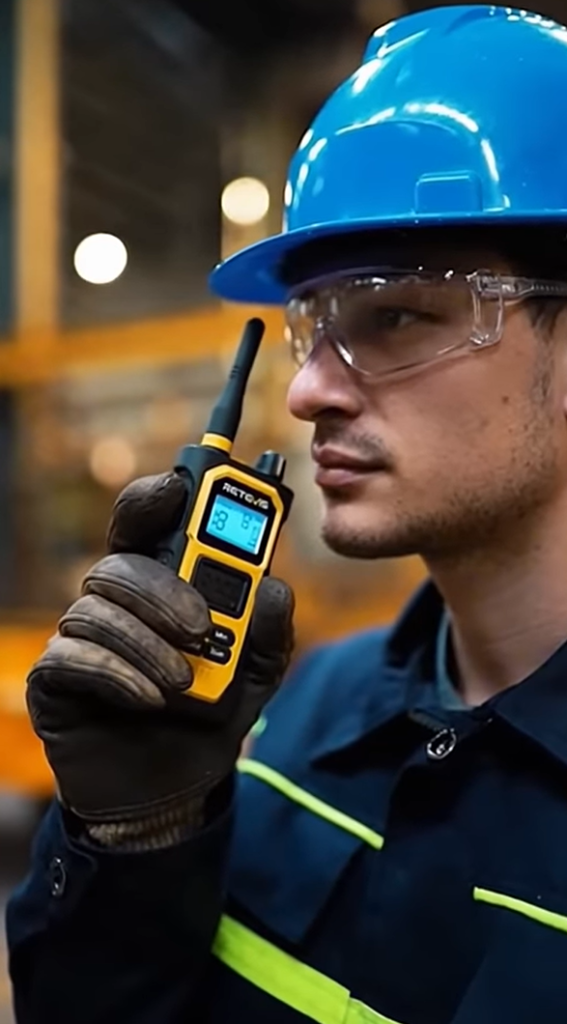
Warehouses and Distribution Centers: Reliability at Scale
Eliminating Signal Loss in Metal-Heavy Layouts
Steel racking systems and dense inventory create severe radio frequency interference and dead zones. The RETEVIS standard prioritizes optimized RF performance and repeater-ready designs to maintain consistent coverage across entire facilities, preventing stalled forklift traffic and workflow interruptions.
Designed for Fast-Moving Teams
Pickers, drivers, and supervisors need radios that work seamlessly with one hand and stay secure during constant movement. Ergonomic form factors, intuitive controls, and dependable mounting options are core requirements under the standard.
Power That Lasts Through Long Shifts
In high-volume operations, a radio shutting down mid-shift disrupts communication chains instantly. The standard mandates battery systems capable of supporting extended 12+ hour shifts, supported by clear power indicators to prevent unexpected outages during peak periods.
From Problem Response to Reliability Planning
Rather than relying on post-incident fixes, RETEVIS encourages a proactive communication strategy through its Reliability Diagnostic. This assessment evaluates environmental noise, facility layout, usage patterns, and exposure risks against a structured three-tier reliability model:
- Foundational Durability – Protection against everyday drops and wear
- Environmental Resilience – Stable operation across temperature, dust, and moisture extremes
- Critical Safety Reliability – Maximum clarity, coverage, and uptime in high-risk conditions
The result is a practical roadmap that helps operations leaders align communication equipment with actual site demands—reducing downtime, safety exposure, and inefficiencies.
Strengthening the Most Human Link in Industrial Operations
As construction projects grow more complex and warehouses operate at increasing speeds, dependable communication becomes a non-negotiable requirement. Two-way radios remain the fastest, most direct connection between people on the ground—and their reliability directly shapes outcomes.
“Communication reliability deserves the same attention as machinery, structural systems, or software platforms,” the RETEVIS expert adds. “When radios perform predictably, teams move faster, safer, and with fewer interruptions. That’s the standard modern industrial operations should expect.”
The Industrial Two Way Radio Communications Reliability Standard Guide is now available from RETEVIS for industry professionals seeking to strengthen on-site communication. Learn how RETEVIS Industrial Two Way Radios are engineered for real-world conditions—and how a reliability-first approach can prevent disruption before it begins.